Buku atau Kita yang Berubah?

Semalam adalah pertama kali saya menyertai Twitter Space secara serius dan pengalaman sulung juga cuba menjadi speaker. Not bad. Selesa mungkin kerana tidak perlu menatap pandangan orang lain dan kurang debaran. Kami bercerita mengenai filem atau drama berkaitan buku yang pernah ditonton dan perkara menarik mengenainya.
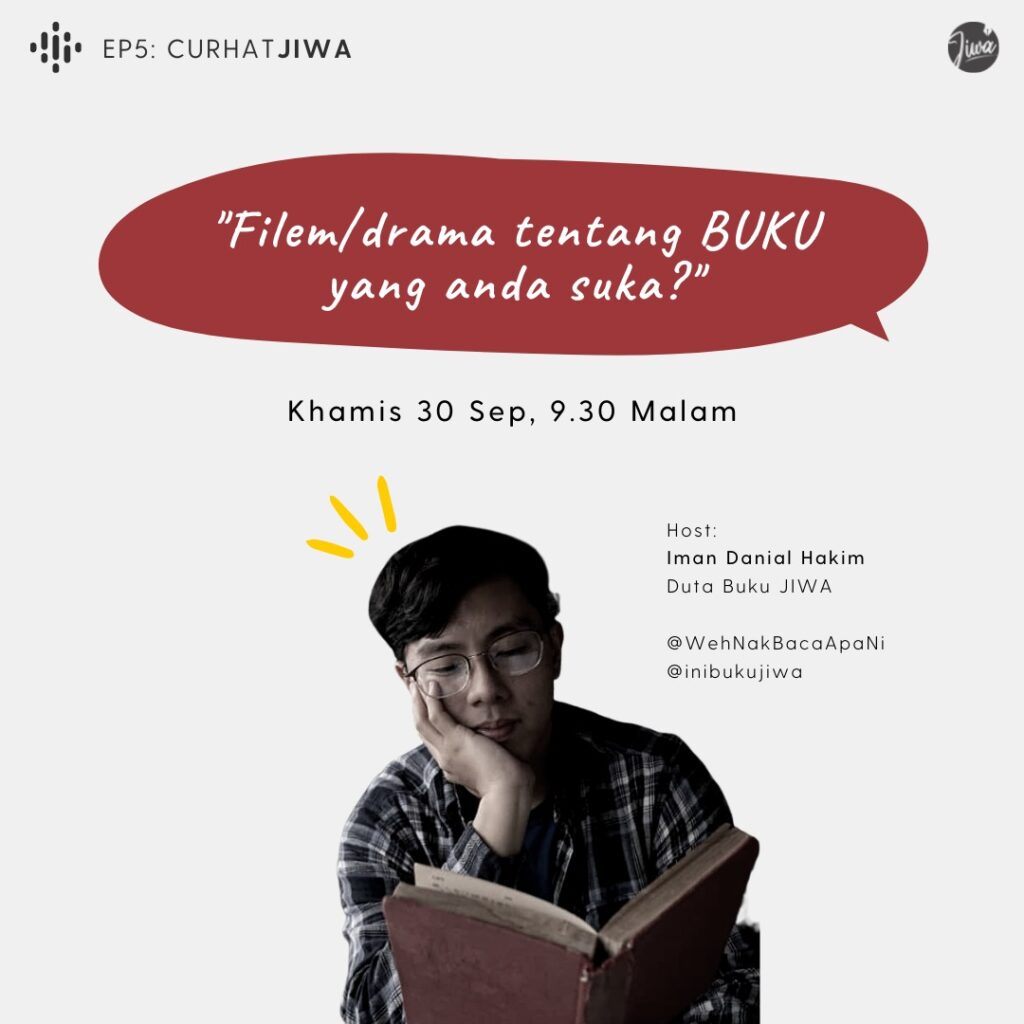
Sebenarnya semasa melihat poster ini, saya terus merasakan wajib menyertainya kerana ada sesuatu yang terbuku selama ini perlu diluahkan. Ahahaha, begitulah hidup seorang penggemar buku yang tak begitu bergeng dan tidak pandai berinteraksi di media sosial. Saya bercerita tentang sesuatu yang saya tuliskan setahun lepas tentang sebuah drama Korea.

Tulisan di bawah ini adalah catatan tersebut, tentang drama Romance is a Bonus Book (Mei 2020).

__________________________________

Saya bukanlah peminat atau pengikut trend K-Pop atau drama Korea seperti kebanyakan orang di sekeliling saya, tetapi saya faham sebab ia disukai ramai dan langsung tiada masalah dengan kefanatikan seseorang. Saya jarang cuba menonton drama kerana kekurangan masa atau kerana sebaik sahaja saya mula, kebiasaannya terus ketagih hendak menghabiskan keseluruhan drama dan keutamaan saya sangat terganggu.

Sejak perintah kawalan pergerakan (PKP) bermula, saya membaca beberapa review positif mengenai sebuah review drama korea; Romance is a Bonus Book. Ia adalah kisah mengenai sebuah syarikat penerbitan buku yang saya rasa dekat dengan diri kerana kecintaan pada buku. Saya baru sahaja menyudahkan Episod 10.

Ada satu babak yang memaparkan Eun Ho meluahkan perasaan kepada Dan-I selepas mereka bersahabat lebih 20 tahun. Malam itu, Dan-I pulang ke rumah (Eun Ho dan Dan-I tinggal bersama), tetapi apabila ternampak Hae-Rin di depan, dia memilih untuk keluar bersama Seo Jin sementara menunggu Hae-Rin beredar.

Luahan perasaan daripada Eun Ho amat mengganggu Dan-I sehingga ke tahap Seo Jin mengesan sesuatu yang tidak kena ketika mereka makan.

Seo-Jin:

“Ada sesuatu yang mengganggu awak.”
“Beritahulah saya. Saya seorang pendengar yang baik.”
“Mungkin dengan bercerita awak boleh ringankan beban yang ada?”

Dan-I:

“Saya ada sebuah buku. Buku yang sangat lama.”

Dalam mindanya Dan-I memikirkan, ‘Tajuk buku itu adalah Cha Eun Ho’.

“Memandangkan ia buku yang baik, saat saya berasa penat, gembira atau kosong, saya pasti akan keluarkan dan baca semula. Saya sudah hafal baris-baris dalam buku itu kerana sudah membacanya berulang kali. Tetapi, kebelakangan ini, saya rasakan buku itu pelik.”

Seo Jin:

“Tiba-tiba sahaja?”

Dan-I:

“Ya. Secara tiba-tiba. Walaupun saya membaca baris-baris yang pernah saya serlahkan (highlight) dulu, saya jadi tak tahu kenapa saya serlahkannya dulu. Walhal, ia adalah buku yang sering ulang berulang kali. Namun, saya sering lihat baris baru yang tidak pernah dilihat sebelum ini. Sekarang, saya sedar, terlalu banyak baris yang saya terlepas. Saya rasa seperti membaca buku baru.”

Dan-I sedang bercakap tentang Cha Eun Ho. Dia mengenalinya selama bertahun-tahun tetapi tidak mempunyai sebarang perasaan tetapi sekarang, apabila Eun Ho meluahkan perasaan, tiba-tiba dia berasa lain.

Saya suka jawapan Seo Jin.

Seo Jin:

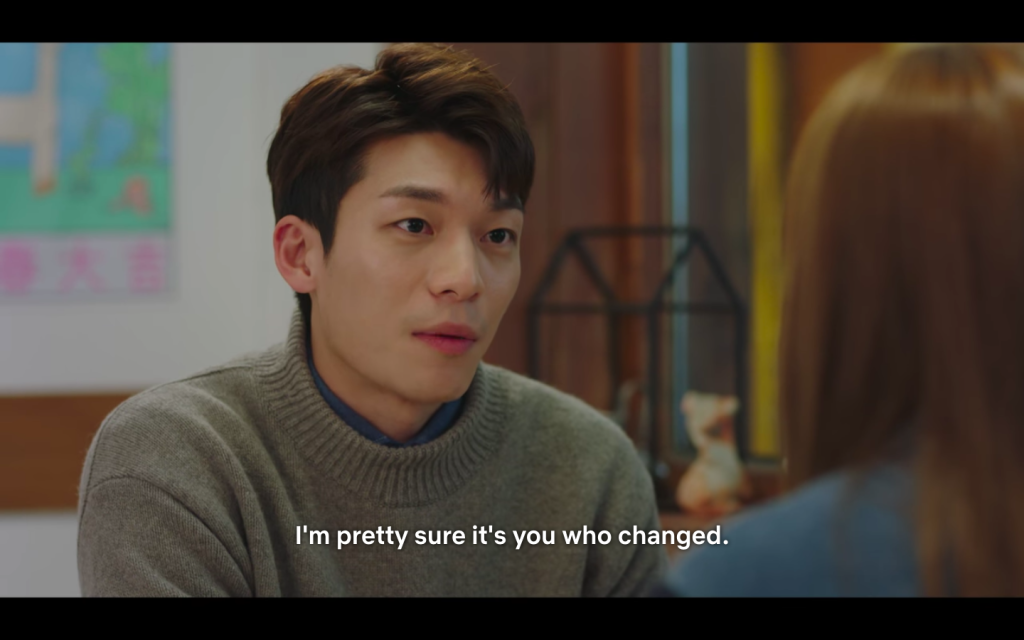
“Mungkinkah ia sebenarnya sebab awak sendiri, pembaca buku itu yang sudah berubah? Macam itulah buku yang baik. Jika awak mengulang baca buku yang pernah dibaca ketika berumur sepuluh tahun, kita akan rasa sangat berbeza sebab kita sudah berubah.”

“Buku awak tak pernah berubah.”
Saya teringat ketika pergi ke Pesta Buku Antarabangsa Kuala Lumpur (PBAKL) 2018 bersama pasangan, kami singgah di sebuah reruai buku bernama Blink Book. Suami saya mengenali individu yang menjaga booth itu. Penulis Blink Book itu, Puan Ain Maisarah pernah menjadi penulis di PTS, sebuah penerbit yang mula menjadi terkenal ketika saya bersekolah. Beliau menulis novel untuk remaja.

Kami berbual dengan individu itu tentang buku Ain Maisarah dan beberapa novelis yang saya kenali seperti Farihah Iskandar dan Aizam Aiman. Keberadaan saya di situ menggamit semua memori semasa zaman remaja. Buku yang saya mula baca dahulu termasuk dalam kategori ringan dan kebanyakannya melibatkan perihal cinta remaja. Namun, apabila saya mula menjadi dewasa, saya melalui fasa berbeza dalam hidup, saya berjumpa dengan pelbagai jenis manusia dan suasana sekeliling saya berubah.

15 tahun lalu, buku itu sangat bermakna buat saya, tetapi, kini ia bukannya tidak bagus, tetapi saya bukan orang yang dahulu lagi. Saya sudah tinggalkan Aina 13 tahun lalu. Sama seperti yang Seo Jin katakan,  kita memilih bahan bacaan berbeza kerana kita adalah orang berbeza sekarang, begitu juga cara kita berfikir.

Terima kasih buat Farihah Iskandar dan Aizam Aiman yang memperkenalkan saya kepada Jihan, Hazman, Suria, Khairi dan Adilah. Tidak lupa juga penulis kegemaranku Hlovate (bilalah akan ada buku baru... ? teehee) kerana memberi saya peluang untuk berkenalan dengan Addin Shah, Kucai, Benz Alif, Ed Sassin, Ashraf Omar, Najwa, Abang Shah, Johana, Along dan ramai lagi. Semoga Allah memberkati kalian kerana menjadikan zaman remaja saya amat bermakna.

Amiiin.
  • Tiada kategori

Getting Focus in The Digital World

  • You wanted to study but decided to have a quick check on your phone and ended up scrolling your Twitter account for almost an hour?
  • You wanted to reply text messages / Whatsapp message, and suddenly you already spend most of your time scrolling your Facebook timeline or Instagram?
  • You are tired but you thought checking your social media is a good thing to do before went to bed is a good idea, and tadaaaa, it’s past your bedtime and you ended up waking up late to work?
  • You have nothing to do / you have some free time, and you are scrolling your phone even though there’s actually nothing for you in it?

Does this situation seems familiar? Too many on hold task because we have been inserting “some time for scrolling our phone”.

A few months ago, I read a book by Cal Newport, Digital Minimalism: Choosing a Focused Life in a Noisy World. I want to share some trivia/interesting points/quotes Newport wrote in the book.

  1. “These apps and slick sites were not gifts from ‘nerd gods building a better world’ “. We might think the tech company invent those devices and apps to make our life better and easier, but actually, they are not. “They were instead designed to put a slot machine in our pockets”. They build the apps to make money. Yes, this does remind me of the apps I bought because it’s premium (insert self laugh) or I bought it because it has a special discount! I remember presenting this book in my book circle, and one of the members who work in the IT industry was admitting this fact. She said that they monitored every site we clicked, and they studied the way to make us stay as long as we can on their apps/sites. Another quote from the book, Sean Parker, the founding President of Facebook said in developing the apps, they asked a question “How do we consume as much as of your time and conscious attention as possible? So, how much time have we consumed for our social media?
  2. Newport introduced the idea of “30 Days Digital Declutter“, where you delete all unnecessary apps (which do not affect your life/work) and re-introduce the apps after the declutter finish. To be honest, before reading this book, I did my own version of digital declutter back in 2019 where I deleted Facebook, Instagram and Twitter from my phone and never try to open it in my web browser at all. Surprisingly, I can finish reading five books that month instead of normally only two books. There is a woman, an influencer who participate in the declutter experiment, sharing about her experience during the declutter. She became bored after the second day because she has “nothing” to do. There are so many things we can do every day, but because of social media is the things we do every day, when it’s gone, we suddenly have “nothing” to do? Think again.
  3. Addiction doesn’t only apply to substances (alcohol & drugs), but also behavioural. Social media is also an addiction. How do tech company encourages behavioural addiction? By giving something to people so that they: a. Crave for intermittent positive reinforcement. b. Drive for social approval. As an adult, I may not have that behaviour anymore, but I still remember when I was younger, how good I felt when people commented and liked my status. I might not be getting any positive reinforcement physically, but hey, I get it a lot online.
  4. Spend time alone. Or solitude. Newport suggested that people need to allocate their time to be alone. “Solitude requires you to move past reacting to information created by other people and focus instead on your own thoughts and experiences-wherever you happen to be.” We hardly spend our time for solitude nowadays due to “busy” filling out our time scrolling our newsfeed, which actually does not require our attention. Solitude deprivation, on the other hand, is the state in which you spend close to zero time alone with your own thoughts and free from input from other minds. Existence of the smartphone and social media seems encouraging the solitude deprivation and increase in teen mental health issues because teenagers have lost their abilities to process and make sense of their emotions, or to reflect on who they are and what really matters, or to build strong relationships, or even to just allow their brains time to power their critical social circuits, which are not meant to be used constantly, and to redirect that energy to other important cognitive housekeeping tasks.
  5. Reclaim Leisure. I love the idea Cal emphasizes that “doing nothing is overrated”. While he categorized spending time with social media as low-quality leisure (remember, what we did was scrolling, there’s nothing difficult about that), he proposed to do high-quality leisure during our free time, be it a bit difficult but it will benefit us later.
All in all, we must reject the mindset that we must always have a smartphone with us. We are the one who controls our phone, not controlled by our phone. Social media was first invented to make us connected to people, but make sure to not disconnect with people around us.
This may not represent totally content from the book, but I hope that this entry helps you to start your early journey of digital minimalism.
  • Tiada kategori

Have the Book Changed?

I am not a K-Poppers or a Korean drama follower just like few people around me, but I have nothing against it. I simply don’t spend much time on it because of no time or I will be addicted and my priority changes. 

Since the Movement Control Order (MCO) started, I read a few good reviews about a Korean series; Romance is a Bonus Book. It is a story about a publishing company, which I feel very relatable to me, just because I like books. I just finished with Episode 10 now.

There is a scene where Eun Ho confessed his loved to Dan-I after more than 20 years of friendship. The night Dan-I went back home (Eun Ho and Dan-I live together), when she saw Hae Rin in front of the house, she decided to go out with Seo Jin until Hae Rin come out from the house. 

The love confession by Eun Ho disturbed Dan-I so much that when Dan-I was eating with Seo Jin, he knew something was wrong. 

Seo Jin (SJ): “Something is bothering you.” ” Tell me. I am a very good listener.” “Why didn’t you tell me to lighten the load?” Dan-I (DI): “I had a book with me. A very old book. In her head, “The title is Cha Eun Ho”.  “Since it’s a very good book, whenever I feel tired, happy or empty, I used to take it out and read it. I’d memorize the lines of the book because I read it so many times. But lately, the book feels a bit strange to me.” SJ: “All of a sudden?” DI: “Yes. All of a sudden. Even when I read the lines I highlighted before, I don’t know why on earth I highlighted such lines. It is definitely the book that I read over and over again countless times, but I keep on seeing new sentences I haven’t seen before. I’ve now realized there were so many lines I missed. It feels like I’m reading a new book.” Dani is obviously talking about Eun Ho. She knew him for years but never had any feelings for him, but now when Eun Ho confessed, she suddenly feels different.  I like how Seo Jin’s answered it. SJ: “Could it be because of you, the reader might have a change of heart? That’s how good books are. If you reread a book you read when you were ten, it feels completely different because we have changed.  The book you have hasn’t changed. 
The heart of the reader has changed.”

I remember when my partner and I went to the Kuala Lumpur International Book Fair (KLIBF) 2018, we stop by a booth name Blink Book. He knew the person in charge. The Blink Book writer, Ain Maisarah, used to be a writer in PTS. PTS is a publisher that started to rise up during my early year of secondary school. She wrote a teenage novel.

We were talking a lot about books by Ain Maisarah and another novelist I knew, like Farihah Iskandar and Aizam Aiman. Stood up there, it reminisces all the memory during my teenage years. The books I started to read is light novels type and mostly lovey-dovey type. But as I grow up, I went through different phases of life, meeting many types of people and my environment changed.

15 years ago, the books were wonderful for me, but now, not that it’s not good, it’s just, I am a completely different person. I already leave behind the 13-year-old Aina. Same like what Seo Jun said. We pick a different type of reading now based on who we are and what we think.

Thank you Farihah and Aizam for introducing me to Jihan, Hazman, Suria, Khairi and Adilah. Not forgetting, my all-time favourite writer, Hlovate (can you produce next book ….? teehee) for bringing me cool people like Addin Shah, Kucai, Benz Alif, Ed Sassin, Ashraf Omar, Najwa, Abg Shah, Johana, Along and many more. May Allah bless all of you for making my teenage life so memorable. Amiin.